
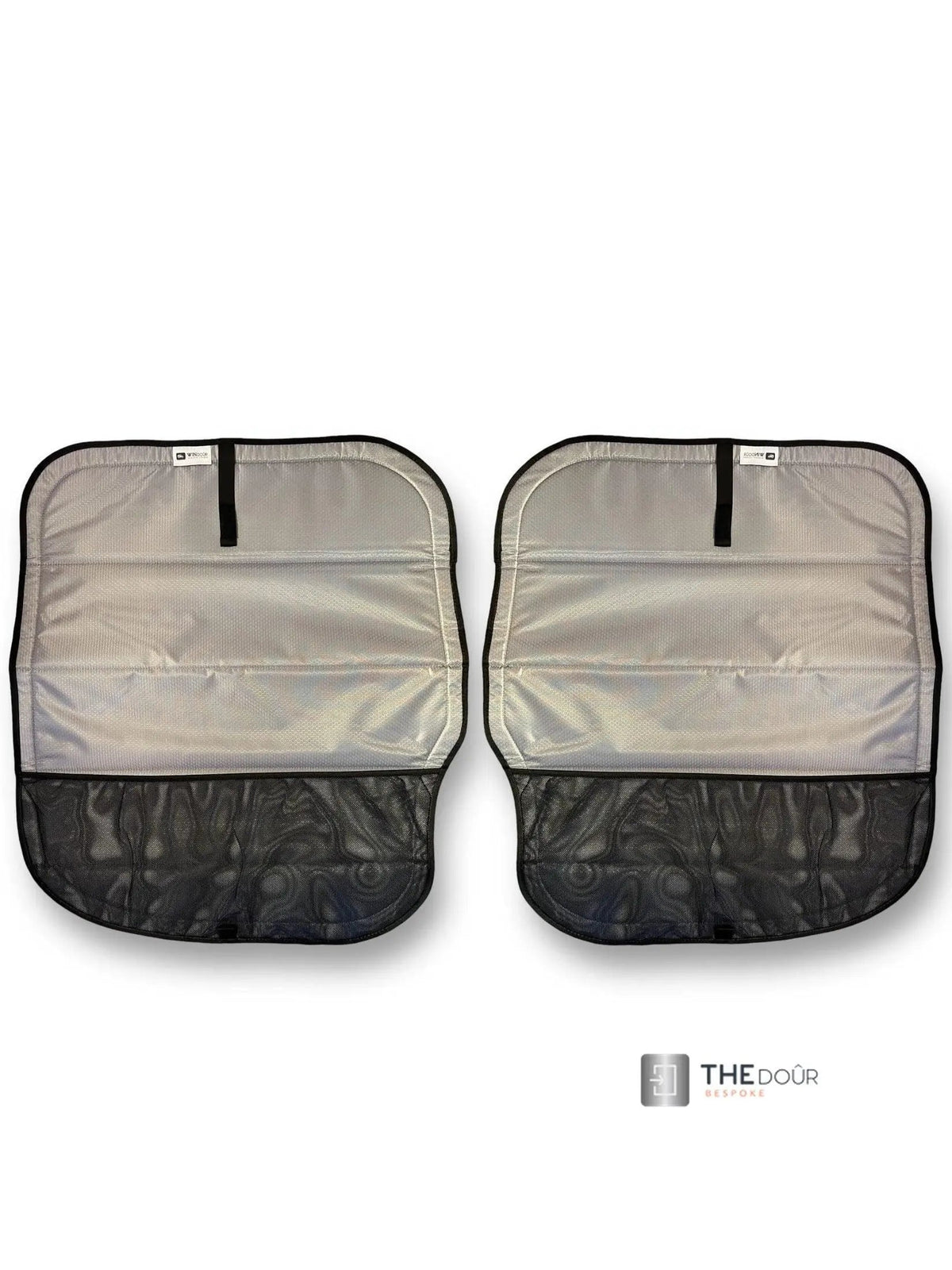
Ask anyone who has done an Iceland campervan trip what surprised them most, and it's rarely the waterfalls. It's the light. In June you can be parked up at 1am and it still looks like early evening. Come back in December and the sun barely bothers getting up. Add in the wind, chilly nights even in summer, and a famous lake named after its midges, and Iceland is one of the best tests there is for how well your van is set up for sleeping, privacy and keeping the weather out.
I'm Rhys, and at THEdoûr we're a small family business in Pembrokeshire making space-saving doors, blinds and nets for campervans all over the world. Here's what I'd want to know before taking a van to Iceland – and how to make it a proper home on wheels while you're there.
Where you can (and can't) sleep in your van in Iceland
The first thing to get right is the rules. Iceland is not a wild-camping free-for-all. Sleeping in a campervan, motorhome or car is allowed only at designated campsites – not in lay-bys, car parks or at the side of the road. National parks such as Þingvellir, Vatnajökull and Snæfellsjökull only allow camping in marked areas, and popular spots like Mývatn and Dyrhólaey have their own bans outside official sites.
The good news is there are around 180 registered campsites across the country. The catch is that many only open in the summer months, while a handful of lowland sites stay open all year. Driving off marked roads is a criminal offence with heavy fines, and campfires are banned apart from a few established campgrounds. So plan your route around campsites and check opening dates before you go.
That matters for your van set-up too. On a campsite you're parked close to other people, often with no trees or hedges around you. Privacy at the windows and doors suddenly becomes a lot more important.
The midnight sun: why blackout matters so much
From June to August Iceland gets up to 21 hours of daylight, and around midsummer it never gets properly dark at all. It's magical for hiking late into the evening, but it's hard on sleep. A thin curtain or a pleated blind that lets light round the edges just won't cut it when the sun is still bright at midnight.
What helps:
- Proper blackout on every window – including the rear doors and any roof vents or skylights, which are easy to forget.
- Close-fitting blinds – light sneaks in round the edges, so a blind that sits snug in a frame does far better than a loose curtain.
- A routine – close everything at the same time each night so your body knows it's bedtime, even when the sky says otherwise.
- A dark sleeping area – if you have a shower room or wardrobe with a door, closing it stops light bouncing in from the other end of the van.
Winter in Iceland: short days, cold nights
Visit for the Northern Lights and it's the opposite problem. Around the winter solstice Reykjavík gets only about four hours of daylight, and fewer campsites are open. Your van becomes your living room for long, dark evenings.
Iceland's wind is often the real challenge rather than the cold itself, and nights can get close to freezing at any time of year – July and August are the only months with no frost anywhere in the country. In a van, a lot of that cold comes straight through the glass. Insulating your windows makes a big difference to how warm the van stays and how hard your heater has to work.
Cold glass plus people breathing and cooking inside a small space also means condensation. Keeping the inside of the windows covered with insulated blinds keeps the warm, damp air away from the coldest surfaces, and a little ventilation each morning helps everything dry out.
Mývatn: the lake named after midges
Lake Mývatn in the north is one of Iceland's highlights – lava formations, geothermal areas and amazing birdlife. Its name literally means "midge lake", and on calm summer days the clouds of tiny flies are part of the experience. Most of them don't bite, but they get everywhere, including straight in through an open sliding door while you're cooking.
A fine mesh net on your side door means you can keep the door open for fresh air and the view without filling the van with flies.
Wet gear and a small bathroom
Icelandic weather changes quickly, so you'll come back to the van wet more often than you'd like. Waterproofs, boots and towels all need somewhere to drip and dry that isn't your bed. If your van has a shower or toilet room, it doubles as a drying room – as long as the door doesn't eat into your living space when it's open. That's where a space-saving door really earns its place.
How THEdoûr products help on an Iceland campervan trip
- Midnight sun and cold glass: our WINdoûr insulated honeycomb blackout blind and net blacks out the light and helps keep heat in. The DUO version gives you a blackout blind and a fly net in one. See the full campervan window blinds range, including the ROLdoûr Slimline retractable blind or net and magnetic window covers.
- Midges and campsite privacy: the VANdoûr universal magnetic mosquito net uses a 0.5mm mesh fine enough to keep out Scottish midges, so Mývatn's flies are no match. It also has a waterproof, silver-backed privacy layer for busy campsites. Measure your door opening to pick the right size (SWB or MWB/LWB).
- Your wet room and drying room: a ROLdoûr retractable shower door rolls away when you don't need it, so your shower room can be a drying room without a swinging door in the way. Made to measure or pre-made, with standard or DualShield fabric.
- 4x4 and overland campers: the ZIPdoûr insulated zip-close door is our lightest and most affordable option – ideal for smaller 4x4 builds heading up the F-roads in summer.
Not sure what fits? Use our Measure My Blind or Size My Door tools, or have a look at our support guides.
Quick Iceland campervan checklist
- Plan each night at a designated campsite and check opening dates.
- Blackout for every window, including skylights, for the midnight sun.
- Insulated window covers and warm bedding for cold, windy nights.
- A fine fly net for the side door if you're heading to Mývatn in summer.
- Somewhere to dry wet waterproofs that isn't your bed.
FAQs
Can I wild camp in a campervan in Iceland?
No. Sleeping in a campervan, motorhome or car is only allowed at designated campsites, not in lay-bys, car parks or by the roadside. Rules are stricter still inside national parks, so always check before you stop for the night.
How do I sleep in a van during Iceland's midnight sun?
Black out every window properly, including the rear doors and skylights. Close-fitting insulated blinds like WINdoûr block light far better than curtains, and they help with the cold nights too.
Are there midges in Iceland?
Yes, especially around Lake Mývatn in summer – the name means "midge lake". Most don't bite, but a fine mesh net on your side door keeps them out while you keep the door open.
Do campsites stay open in winter?
Many Icelandic campsites only open in the summer months, though a handful of lowland sites stay open all year. Check opening dates before you travel in winter.
Do you ship to Iceland?
We ship worldwide from the UK. If you have any questions about delivery or which product suits your van, just get in touch.
Get your van ready for Iceland
Whether you're chasing the midnight sun or the Northern Lights, a dark, warm, fly-free van makes all the difference. Explore our campervan and RV range, or contact us and our family team will help you choose the right blinds, nets and doors for your build.
– Rhys Tomlin, THEdoûr Bespoke
Share:
Living Narrow in Amsterdam: Space-Saving Ideas for Narrow Houses